Why are dogs associated with Yang and cats with Yin? The Taoist principle of companion spirits for balancing household Qi
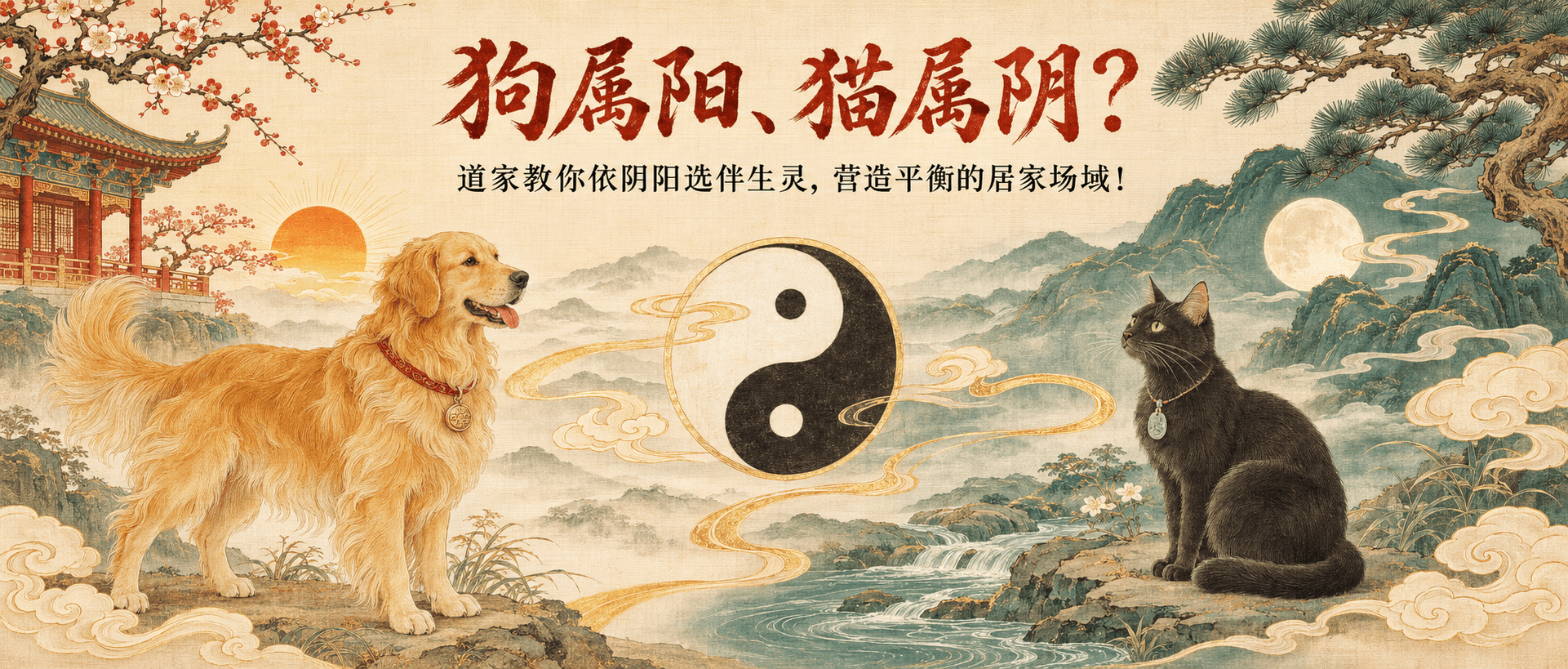
In the Taoist perspective, nurturing living creatures is not for casual amusement. Instead, it means coexisting and accompanying animal spirits, drawing on yin and yang energies to harmonize the dwelling space and cultivate the mind and body. To understand the yin-yang principles of animal spirits and raise them in accordance with their innate nature is to practice the Dao of following nature, cultivating the mind and stabilizing the abode amid ordinary daily life.
l.What animals have the most yang energy?
Yang qi governs growth, brightness and protection. It embodies the firm nature of Qian. It can invigorate the stagnant and declining qi in a residence, dispel yin turbidity, safeguard the stability of the home, and bring clarity to the mind.
Taoism holds that the following creatures are innately abundant in Yang qi, making them suitable choices as Yang beasts.
Canines: Endowed with the pure yang energy of earth and fire, they are loyal and active, keeping watch day and night. Capable of guarding the home and warding off evil, they are the top choice for preserving yang energy in a household. Large dogs with robust builds and warm yellow or reddish-brown fur carry deeper and more substantial yang energy.
Rooster: It crows at dawn to break through the dark night. Endowed with the qi of wood and fire from the East, it is a creature of pure yang. It can dispel negative yin forces, stabilize the household and calm the spirit. In ancient times, Taoists often used roosters to purify residences and ward off impurities.
Koi and golden arowana: Swimming in flowing water, bathed in sunlight, with glossy scales mostly in warm tones. They embody vibrant yang energy, invigorating the vitality of the home and easing stagnant qi.
Songbirds such as parrots and thrushes: they perch on sunlit branches during the day, singing with clear calls, absorbing the rising qi of shaoyang. This can disperse stagnant qi within the residence and invigorate the vitality of the entire house.
ll. Methods for Distinguishing Yin and Yang in Animals
Observing things from the perspective of Yin and Yang and discerning innate endowments through the Five Images is the Taoist method of observing objects and extracting their symbolic meanings. By examining five aspects: timing, position, nature, colour and sound, one can perceive their energy fields.
Distinguish Yin and Yang through daily routines: Rising by day and resting at night follows the light of heaven, absorbing solar qi as Yang; staying dormant by day and active at night moves with the shades of night, drawing in the condensed Yin qi of moonlight as Yin.
Distinguishing yin and yang for dwellings: Residing on sunlit highlands and open plains, one receives the qi of heavenly yang and earthly dryness, which pertains to yang; living in dark corners, deep waters, or damp and shady places, one receives the qi of cold stagnation, which pertains to yin.
Temperament distinguishes yin and yang: those who are enthusiastic and outgoing, active and sociable, and fond of being close to others possess yang energy; those who are calm and solitary, reserved and self-possessed, and prefer quiet solitude possess yin energy.
Distinguishing Yin and Yang by body color: warm hues such as red, orange, yellow and brown embody the Qi of Li Fire and belong to Yang; somber colors including black, cyan, blue and grey embody the Qi of Kan Water and belong to Yin.
Distinguishing yin and yang by vocal sounds: A loud, clear, far-carrying and well-projected crowing indicates smooth circulation of yang qi; faint vocal sounds and infrequent calls signify the inward gathering of yin qi.
III. Yin-Yang Classification of Common Household Pets
Based on the Taoist principle of observing things through yin and yang, this document sorts out the innate nature of common creatures in households to help select suitable spirits for companionship.
Yang-type|Boost vitality, secure the dwelling and preserve positive energy Large dogs, roosters, koi fish, parrots, hwamei birds, canaries, pigeons.
Yin-Yang Balance Category | Harmonize energy, bring gentle peace to the home Small and medium-sized dogs, hamsters, rabbits, ornamental parrots, domestic pigeons, small tropical fish. These creatures carry calm energy, with no excess of yang or yin. They suit most households and are the safest choice.
Yin-aligned|Purge turbid qi, calm the spirit and quiet the mind Cats, grass turtles, lizards, geckos, snakes, nocturnal rodents, certain cold-water fish. Yin creatures govern containment, purification of turbidity and tranquility. They can absorb restless and turbid qi within a dwelling, suitable for households with chaotic moods and a noisy energy field.
IV. Nurture at Home in Accordance with the Principles of Yin and Yang
Cultivating spirits through the Dao lies in conforming to yin and yang, aligning with directions, and preserving one’s original heart. One may follow this principle to remedy the imbalance of the dwelling with the energy of beast spirits.
Creatures of Yang nature should be placed in bright areas: beings brimming with Yang energy are suitable for open, sunlit spaces such as living rooms and balconies, drawing on natural light to foster their vitality, attract auspiciousness and protect the home.
Shady creatures thrive in quiet corners: these yin-aligned beings may be placed in studies or secluded entryways. They should not be exposed to strong light for long periods. Honouring their inward, reserved nature helps them dispel negative energy.
A dwelling may have energetic imbalances, which can be remedied by choosing suitable spirit creatures: if a residence is cold, damp and its occupants often feel fatigued and listless, keep yang-natured beasts to boost vital energy; if the home is noisy and restless, making it hard to calm the mind, yin-natured beasts may be kept to gather energy and soothe the spirit.
Do not go against their natural rhythms: yang creatures tend to play and interact by day, while yin creatures stay quiet at night. Never force them to reverse their schedules; otherwise, their vital energy will become disordered and disturb the peace of the home.
Quantity lies in balance: nurturing spirits shuns one-sided extremism. Raising only yang beasts stirs restlessness in the dwelling’s energy, while raising only yin beasts leads to stagnant aura. The pairing of yin and yang aligns with the principle that harmonious vitality arises from balanced interaction.
V. Common Misconceptions
Taoism upholds impartiality and rectitude, and nurturing the spirit follows yin and yang. There are several misconceptions that need to be clarified:
Do not view yin and yang as a binary opposition: yin creatures are not inauspicious. Cats are yin spirits, adept at absorbing foul turbidity and purifying the dwelling space. Spirit turtles belong to yin, embodying calmness, tranquility, and the gathering and preservation of blessings and wealth. Yin and yang each serve their own purposes, with no inherent hierarchy or distinction between good fortune and misfortune.
Do not forcibly go against the innate nature of living beings: forcing nocturnal creatures to be played with in the daytime, or keeping sun-loving animals confined in dark places for long periods, runs counter to their inherent vital energy. The creatures will grow restless and prone to illness, and their energy field may also backfire on the residents.
Do not be bound by rigid beliefs about good and bad fortune: black cats and solid-black dogs merely carry relatively heavy yin energy and are not omens of disaster. If you take a liking to each other and your hearts resonate, they are fine companions.
Do not be trapped by excessive obsession: both humans and spirit beasts are independent Dao entities. Companionship lies in mutual nourishment, without deep obsession or emotional dependence. Preserve your energetic boundaries to attain freedom and peace.
VI. Follow nature and stay true to your original self
Man follows the earth; the earth follows heaven; heaven follows the Dao; the Dao follows nature. In Daoism, nurturing living beings is never a pastime for amusement. It means coexisting with all creatures of heaven and earth and comprehending the great Dao of the mind and nature through animal spirits. Observe the sincere and upright nature of dogs to learn loyalty and responsibility. Observe the calm self-possession of cats to cultivate freedom and ease. Observe turtles quietly abiding through the years to understand composure and self-restraint. Observe fish swimming leisurely and unhurriedly to learn to go with the flow and refrain from contention. What we call keeping pets is in truth nurturing the home, nurturing the mind, and nurturing the Dao. There is no need to deliberately seek a perfect yin-yang match. If you already have a creature that has stayed with you for a long time, sharing daily life and merging your hearts, the power of this bond has long transcended superficial energy fields. Meeting by fate is the finest harmony. Choose a creature that resonates with you, respect its innate nature, and stay true to your own heart. Amid the balance of yin and yang, preserve the peaceful warmth of your home and walk freely side by side.
Related reading

Must-read for praying at Taoist temples! Many people have been doing it wrong for years
The Xiayuan Festival: Remember — one place not to go, two things not to do, three foods to eat, and four taboos to observe!

The Cold Clothes Festival on the First Day of the Tenth Lunar Month | Sending a paper-made cold garment, remembering departed loved ones
Want to understand your chart deeper?
Generate your free chart in three minutes, or book Feng Shui for your home or business space.