The Cold Clothes Festival on the First Day of the Tenth Lunar Month | Sending a paper-made cold garment, remembering departed loved ones
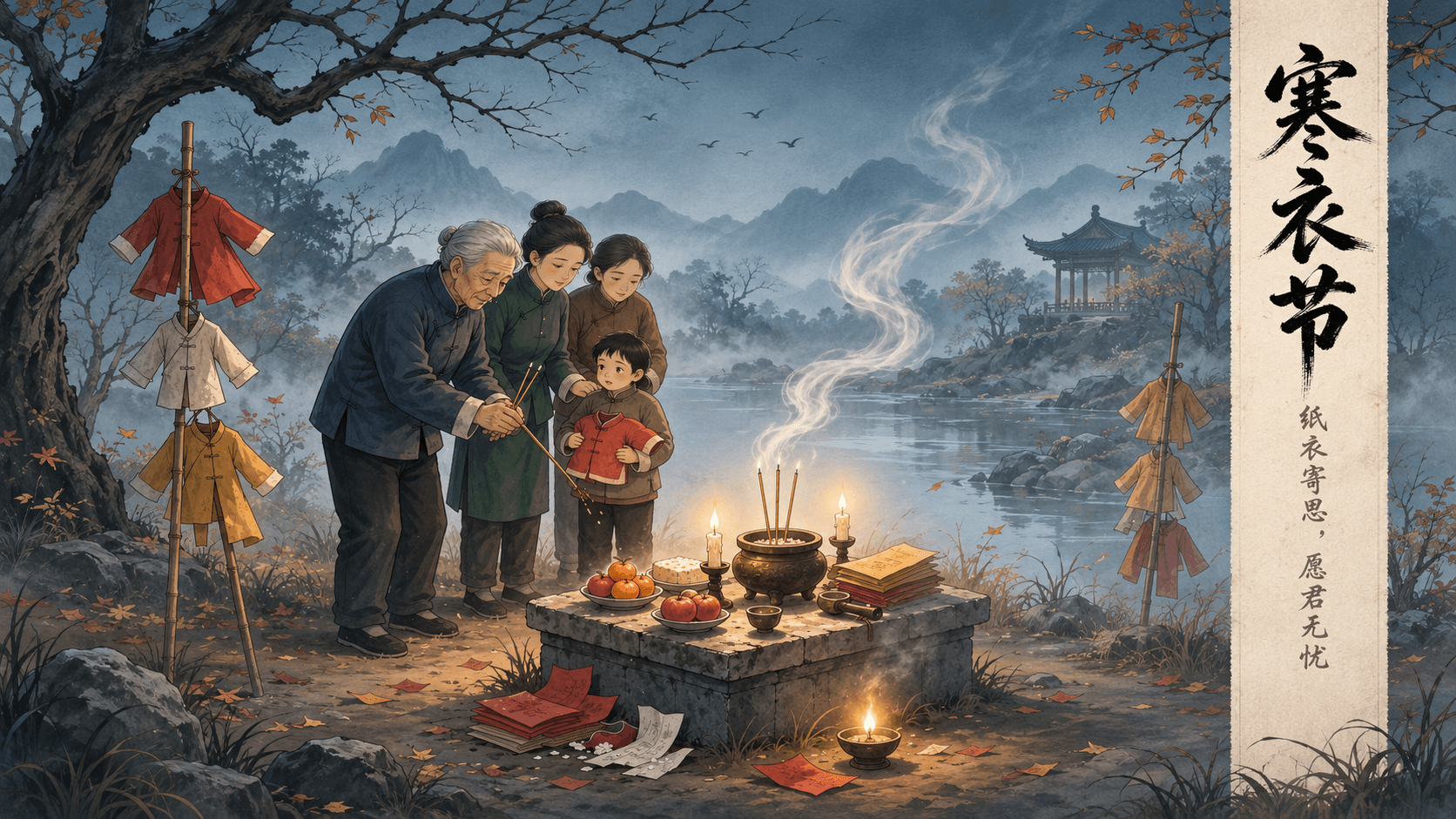
As time moves into the first month of winter, the north wind brings cold, frost clings to plants and trees, and people one by one put on extra clothes to keep warm. The first day of the tenth lunar month is the Cold Clothes Festival in folk tradition. Together with the Qingming Festival and Zhongyuan Festival, it is known as the three major festivals for ancestor worship. In Taoism, this day is the Min Sui La, one of the Five La Days. It is an important occasion to pray for ancestors, deliver departed souls, hold fasting rituals and do good deeds. A paper-made cold garment carries remembrance, and a wisp of incense connects the mortal world to the nether realm. At the heart of the Cold Clothes Festival lies the millenniums-old Taoist heritage that "filial piety is the foundation of the Dao; saving others is saving oneself".
Taoist Origin: On the People's Annual Lā Day, conduct audits and offer sacrifices to ancestors
The Daoist scriptures record that there are five fasting days of La throughout the year, when the Five Emperors gather to conduct inspections and assessments: the Heavenly La on the first day of the first lunar month, the Earthly La on the fifth day of the fifth lunar month, the Virtue La on the seventh day of the seventh lunar month, the Folk Year La on the first day of the tenth lunar month, and the Monarch La on the eighth day of the twelfth lunar month. On these Five La days, deities examine the merits and faults of mortals, as well as the sins and blessings of the departed. Sincere and devout thoughts expressed through rituals can reach the netherworld, helping ancestors atone for transgressions and gain blessings.
Among these, the Folk New Year's Ritual on the first day of the tenth lunar month is specifically for auditing and verifying the official ranks, stipends, and lifespans of the living. When the first month of winter arrives, yin energy grows strong, frosty cold pierces the bones, and the spirits of the departed in the netherworld also suffer from the bitter cold.
At this time, later generations offer sacrifices to their ancestors and burn winter clothes. Coinciding with the period of mercy granted on the La Day, their sincere and reverent devotion can reach the netherworld. On the one hand, they fulfill the filial piety of human relations, providing warmth and peace for the ancestral spirits against the cold; on the other hand, they perform ritual deliverance in accordance with the Dharma to liberate the ancestral spirits from suffering. The folk custom of sending winter clothes on the Winter Clothing Festival in later ages gradually evolved and secularized from the Taoist tradition of ancestor worship on the Annual La Day.
1.Taoist Ritual: Burning Winter Clothes, Sincerity and Reverence Come First
In the Taoist tradition, the Cold Clothes Festival sacrifice is not merely about burning paper garments. What matters most is sincerity as the foundation. Only by following the rituals can we comfort the spirits of ancestors.
2.Offer sacrifices to ancestors to show filial piety, revering the departed and remembering our origins
"Filial piety stands foremost among the Dao." Offering winter clothes and honoring ancestors is a direct embodiment of the filial piety culture in Daoism. Its core lies in revering the departed and remembering the origins, being grateful for the kindness bestowed by ancestors during their lifetime, and praying for the peace of the deceased in the netherworld. Daoist teachings hold that when ancestors rest in peace, the household will enjoy harmony and descendants will thrive. Sincerely and respectfully offering sacrifices to ancestors is not only an act of filial piety but also a way to accumulate hidden merits for oneself and the family.
The True Meaning of Winter Clothing Offerings: Filial Piety is the Foundation of the Dao, Saving Others and Oneself
Many people think the Cold Clothes Festival is merely about burning paper and offering paper clothes, unaware that it embodies the essential principles of Taoist cultivation. The *Taiping Jing* states: "Among all things under heaven, filial piety ranks foremost."
Filial piety in Taoism is not merely supporting living kin, but also encompasses the compassion of delivering the departed. As people put on warmer clothes when winter comes, they think of their ancestors suffering from cold in the netherworld and burn clothing to send to them. This is the benevolent filial piety of "treating the dead as the living"; reciting scriptures and doing good deeds to deliver wandering souls from suffering embodies the original heart of the Great Dao to "save countless beings".
Taoism has always opposed rivalry and extravagance, holding to the principle that "when sacrificing to deities, act as if they are present". For the Cold Clothes Festival rites, what matters is never the thickness of joss paper or the quantity of spirit clothes, but sincere reverence from the heart. With genuine filial piety, even a single incense stick and sheet of paper can reach the netherworld; without reverence, piles of paper gold and silk offerings cannot ease the cold and suffering of the departed.
The custom of sending winter clothes embodies the enduring remembrance and filial piety of descendants, and helps one cultivate good karma and virtue. Liberating the departed is to liberate oneself. When the ancestors' spirits rest in peace, the living will naturally enjoy lasting blessings.
Offer winter clothes in sacrifice to ancestors, accumulate hidden virtues widely, and let blessings and goodness nourish the self. One’s peace, smooth fortunes, marriage, offspring, wealth, rank and lifespan in life are all borne by karmic blessings. Such blessings cannot be sought from outside; they stem from the inherent kindness of the heart and filial piety passed down through generations. Keep reverence for ancestors in mind, practice filial piety and good deeds consistently. There shall be unseen protection in the unseen world, bringing great benefits to life.
The north wind grows sharper, and the frost and cold deepen by the day. A set of winter garments carries warmth across the divide between the living and the departed; a thought of filial piety bridges the netherworld to connect hearts. From a Taoist perspective, the Winter Clothing Festival is never an empty ritual. It is a heritage of reverence for one’s ancestors rooted deep in the Chinese people’s veins. It reminds us that as we put on extra clothes to ward off the cold, we should not forget our origins and cherish our forebears. We send forth warmth with sincere hearts and uphold ourselves with good intentions, wishing the spirits of ancestors peace and the living tranquility.
May on the day for offering winter clothes to the departed at the year-end observance, the compassionate radiance of Taiyi shine everywhere, so that all souls in the netherworld may receive warmth; may all virtuous believers in the world be blessed by their ancestors, enjoying peace throughout the four seasons and enduring good fortune.
Merit of Offering Winter Clothes
1. Burn winter clothes for ancestors of past generations. Filial piety reaches heaven, and incense burns continuously. One may receive the blessings and protection of forebears, which is the foundation for descendants to enjoy peace and smooth lives.
2. Burning winter clothes for the wandering souls with no one to offer sacrifices to them is an act of great compassion, which accumulates blessings for oneself and brings benefits to all sentient beings.
3. Burning winter clothes specially for a deceased relative is to send remembrance from afar, ease the longing in the heart, mourn the departed, and convey lasting thoughts.
Related reading
Want to understand your chart deeper?
Generate your free chart in three minutes, or book Feng Shui for your home or business space.