The Xiayuan Festival: Remember — one place not to go, two things not to do, three foods to eat, and four taboos to observe!
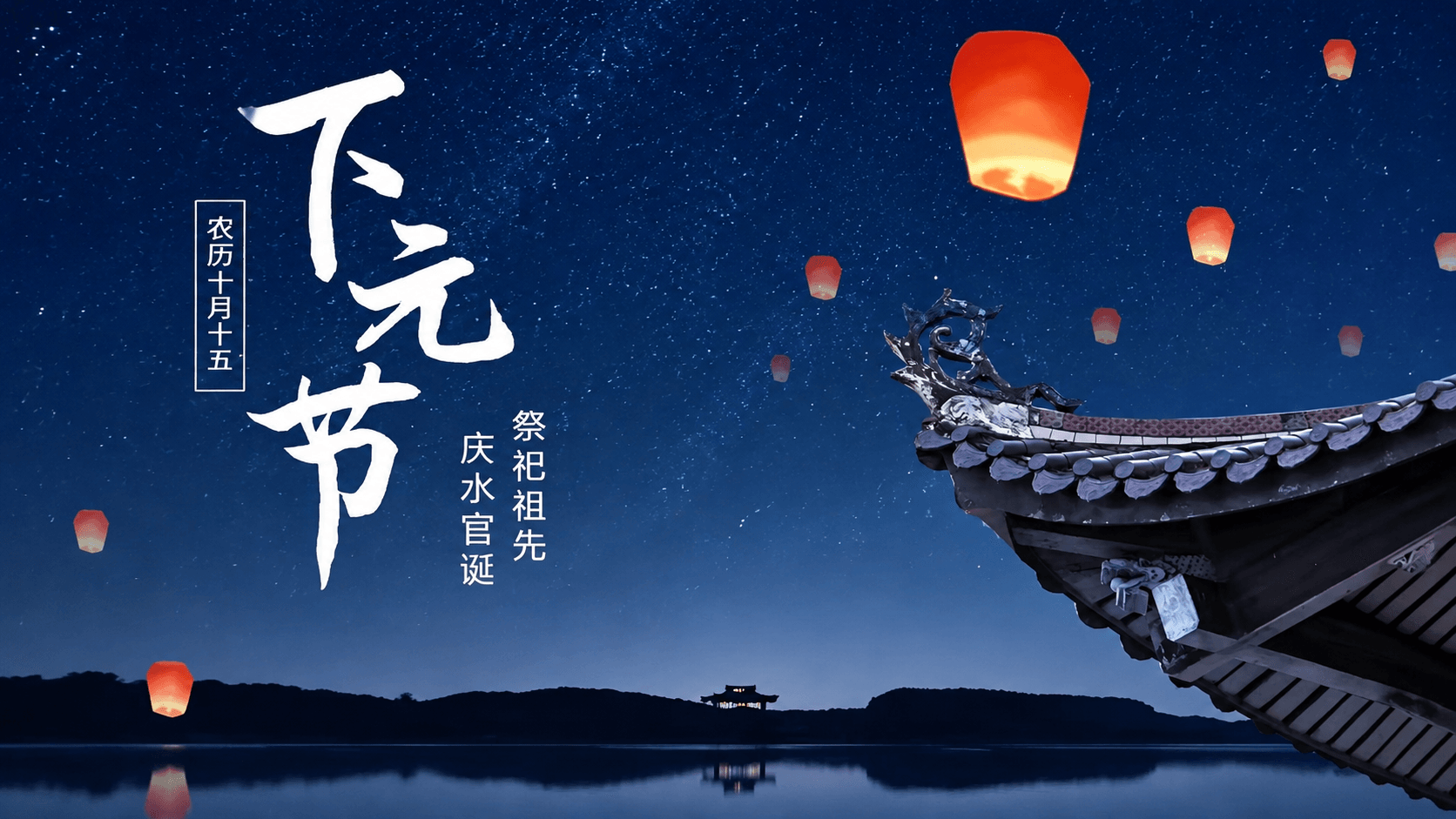
Ancients arranged seasonal festivals with ingenious ideas, emphasizing symmetry and correspondence. The Third Day of the Third Lunar Month in the first half of the year matches the Ninth Day of the Ninth Lunar Month in the second half; the Three Yuan Festivals follow the same pattern: the Shangyuan Festival on the 15th day of the first lunar month, the Zhongyuan Festival on the 15th day of the seventh lunar month, and the Xiayuan Festival on the 15th day of the tenth lunar month. The three Yuan festivals correspond to one another, each carrying profound meanings.
One origin of the Xiayuan Festival is closely related to Taoism. Taoism recognizes the Three Officials: the Heavenly Official, the Earthly Official and the Water Official. It is said that the Heavenly Official of Shangyuan, imbued with nine qi, grants blessings; the Earthly Official of Zhongyuan, imbued with seven qi, pardons sins; and the Water Official of Xiayuan, imbued with five qi, relieves misfortunes. The birthdays of these three officials fall on the 15th day of the first lunar month, the 15th day of the seventh lunar month and the 15th day of the tenth lunar month respectively, corresponding to the Heavenly Official granting blessings on the 15th day of the first lunar month, the Earthly Official pardoning sins on the 15th day of the seventh lunar month, and the Water Official relieving misfortunes on the 15th day of the tenth lunar month.
On this day, there is a folk custom known as "one thing not to go, two things not to do, three things to eat, and four taboos", which represents the life wisdom passed down from generation to generation.
I. Do not go to remote wilderness areas
The Xiayuan Festival is mainly for sacrificial rites. It favors quietness rather than going out and wandering. Ancient customs hold that people should stay quietly at home on this day and avoid desolate, uninhabited mountains and wilderness. Seasonally, frost and cold come in the tenth lunar month, plants wither, and cold, damp winds prevail in the wild, which can easily invade the body and cause illness. Reducing long trips and outdoor wanderings is a way to preserve one’s health.
II. Avoid excessive eating and drinking
The Lower Yuan Festival is a day for fasting and praying for blessings. According to ancient rituals, before offering sacrifices, one should bathe and purify the body, abstain from meat and alcohol, keep the internal organs unburdened and the body and mind pure. This practice to show sincerity and reverence is known as fasting, with the implication of securing longevity with divine protection. A strict all-vegetarian diet is not mandatory. The essence lies in restraining cravings, avoiding overeating and excessive drinking, eating simple light meals, and calming restlessness.
III. Eat glutinous rice cakes
Like many traditional festivals, the Xiayuan Festival has its own special food custom — eating ciba. Glutinous rice is soft, sticky and warm. Eating it in cold winter warms the body and restores strength. Ciba also carries good wishes: people pray for a peaceful and steady life ahead. With the help of the Water Official who relieves misfortunes, they hope to cast away worries and have everything go well.
IV. Avoid scolding, beating and quarreling
According to folk legend, on the Day of the Lower Yuan, the Water God tours the mortal world to examine people's good and evil deeds. It is taboo for family members to quarrel or speak harshly to one another. Once hostility arises, blessings are hard to gather. As the saying goes, harmony is a blessing. On this day, be more tolerant and less contentious. Speak gently and amicably. When a family lives in harmony, all blessings will come naturally.
According to folklore, on the Day of the Lower Yuan, the Water Official God tours the mortal world to examine people's good and evil deeds. It is taboo for family members to quarrel or speak harshly to one another. Once malice arises, blessings are hard to gather. As the saying goes, harmony is a blessing. On this day, be more tolerant and less contentious. Speak gently and amicably; when the family lives in harmony, all blessings will come naturally.
Related reading
Want to understand your chart deeper?
Generate your free chart in three minutes, or book Feng Shui for your home or business space.